Key takeaways
- Issuing is creating and giving a member a card; processing is everything that happens each time they use it.
- "Modern" means instant digital issuance, real-time data, member-controlled cards, and a tight tie to the app.
- The old model, plastic in the mail and overnight batches, quietly costs members and the credit union.
- You do not need to understand the deep mechanics, just what good looks like and what to ask for.
Card issuing and processing are the two halves of how a credit union's cards work: issuing is creating a card and getting it into a member's hands, and processing is everything that happens each time that card is used. They run constantly behind one of the most-used products you offer, given Americans made 58.5 billion credit card payments and 89.1 billion debit card payments in 2022 alone (Federal Reserve Payments Study). You do not need to understand the deep mechanics to make good decisions, but you do need to know what each part is and what a modern version looks like. Here it is in plain language.
What card issuing is
Issuing is everything involved in giving a member a card: creating the account, generating the card details, producing the physical card, and activating it. In the traditional model, that means ordering plastic, mailing it, and waiting for the member to receive and activate it, a process measured in days. In a modern model, a card can be issued digitally and added to a mobile wallet in minutes, so a member can start using it immediately while the physical card follows. That gap, minutes versus days, is one of the clearest differences between old and modern card programs.
What card processing is
Processing is the chain of steps that happens each time a member uses the card: authorizing the transaction, checking it for fraud, clearing it, and settling it, then updating the member's balance and history. All of this happens in seconds, every time, across every member. The question that separates modern from dated processing is when the member's information updates. In an older, batch-based model, the transaction may not reflect in the member's app until an overnight cycle. In a modern, real-time model, it shows immediately. See what credit unions should know about cloud-native cores.
What "modern" actually means
Modern card issuing and processing comes down to a few concrete things. Instant digital issuance, so members get a usable card in minutes. Real-time processing, so transactions, balances, and alerts update the moment they happen. Member-controlled cards, so a member can freeze, unfreeze, set limits, and manage the card from the app. And a tight tie to digital banking, so the card and the app feel like one product. Each of these is something a member can feel, which is why "modern" is not jargon here. It is the difference between a card that feels current and one that feels behind.
Why the old model quietly costs you
The traditional approach still works, but it leaks value in ways that are easy to miss. The days-long wait for a new or replaced card is time a member might spend reaching for a competitor's card instead. Overnight processing means a member sees a transaction late, which erodes the sense of control that builds trust. And cards that cannot be managed from the app push members toward issuers whose apps make everything easy. None of these are dramatic failures. They are small, constant frictions that quietly move a card from top-of-wallet to the back of the drawer. See building a card program members use.
Why real-time matters so much
The single biggest dividing line is whether the card experience runs on real-time data. A member who sees every transaction the instant it happens, gets an immediate alert, and can freeze the card in two taps feels in control and safe. A member working from yesterday's information does not. Real-time is also what makes modern fraud controls effective, because you cannot stop a fraudulent transaction you will not see until tomorrow. This is why card processing and the core are linked: real-time cards need a core that works in real time. See payments security basics.
How it ties to the app
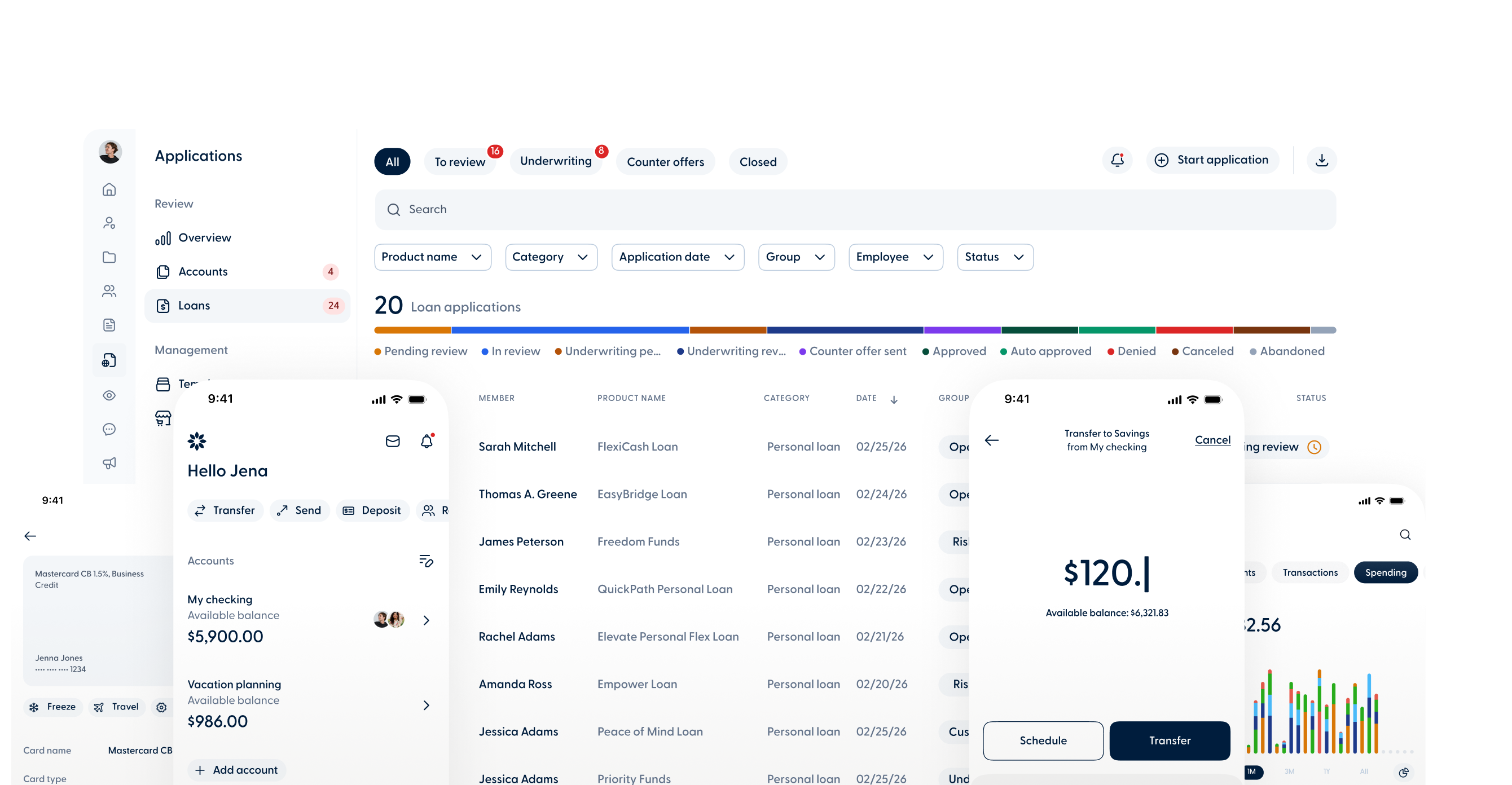
Members experience the card and the app as one thing, so modern issuing and processing only pay off if they connect cleanly to digital banking. The same platform should let a member see a transaction, dispute a charge, freeze a card, and add it to a wallet without leaving the app or noticing a handoff. When issuing, processing, and the app are tightly connected, the card feels effortless. When they are separate systems bolted together, members feel the seams even if they cannot name them. See one platform vs. bolt-ons.
What to ask for
You do not need to evaluate processing infrastructure to get a modern card program. You need to ask for the outcomes that define one. Can we issue a card digitally so members use it in minutes? Does processing update balances and alerts in real time? Can members fully control their cards from the app? And does all of it live inside our digital banking rather than in a separate portal? If the answer to those is yes, the deep mechanics underneath matter far less than the experience members actually get.